An RO (Reverse Osmosis) membrane is the heart of every Reverse Osmosis water purification system. It is a specially engineered semi-permeable membrane that removes dissolved salts, heavy metals, bacteria, viruses, chemicals, and other contaminants from water while allowing only pure water molecules to pass through.
Whether you’re using a domestic water purifier, an industrial water treatment plant, or a commercial RO system, the membrane is the component responsible for producing clean, safe, and high-quality drinking water.
Modern RO membranes can remove up to 99% of dissolved impurities, making them one of the most effective water purification technologies available today.
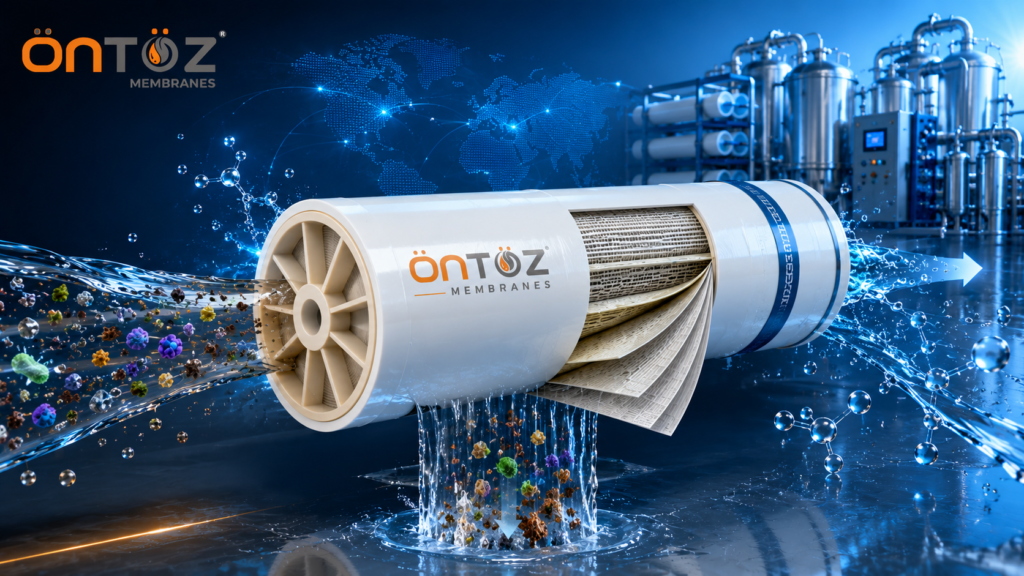
Reverse Osmosis is an advanced filtration process where water is forced through a microscopic semi-permeable membrane using high pressure.
Unlike normal filtration, RO doesn’t simply trap dirt.
Instead, it separates water molecules from dissolved contaminants.
The membrane contains microscopic pores measuring approximately 0.0001 microns, allowing water molecules to pass while rejecting almost everything else.
This technology is widely used in:
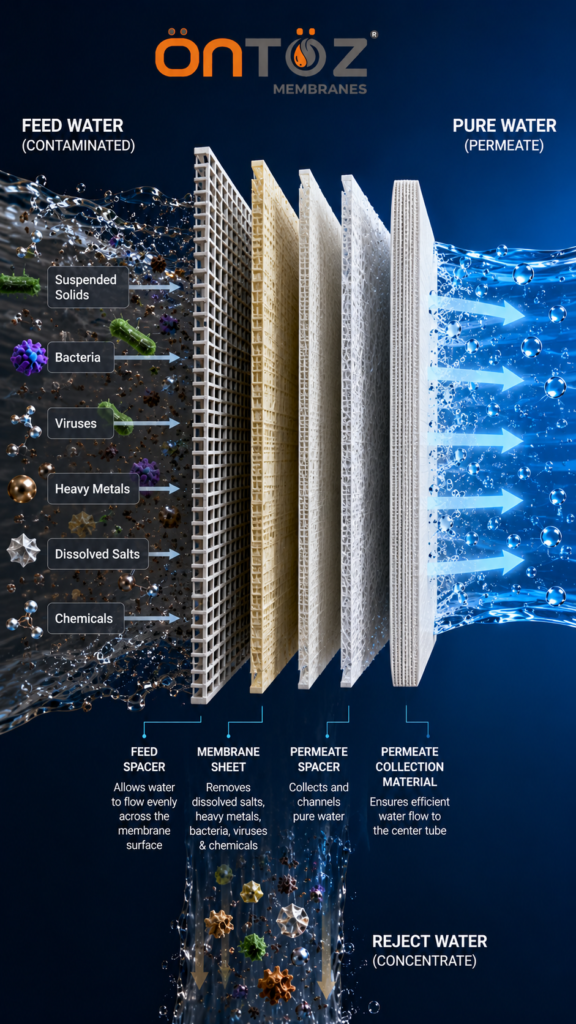
Think of an RO system as the human body.
The pre-filters protect the system.
The pump creates pressure.
But the membrane performs the actual purification.
Without a quality membrane, an RO system cannot effectively remove dissolved contaminants.
This is why choosing a premium membrane significantly improves:
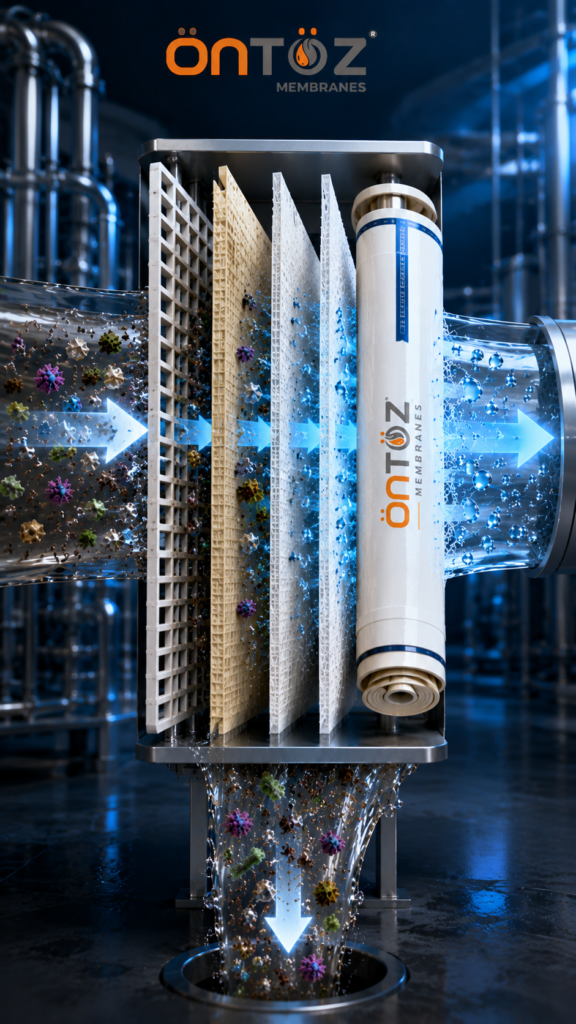
The purification process occurs in four simple stages.
Raw water enters the RO system.
It may contain:
A high-pressure pump forces water toward the membrane.
Pressure depends on:
The membrane allows only water molecules to pass.
Everything else is rejected.
Rejected contaminants include:
Purified water (Permeate) exits one side.
Reject water (Concentrate) carries contaminants away.
The result is safe, clean water with significantly reduced TDS.
| Contaminant | Removal Efficiency |
|---|---|
| Dissolved Salts | Up to 99% |
| Heavy Metals | Up to 99% |
| Lead | Up to 99% |
| Arsenic | Up to 99% |
| Bacteria | Up to 99.99% |
| Viruses | Up to 99.99% |
| Fluoride | Up to 95–99% |
| Nitrates | Up to 95–99% |
| Organic Chemicals | Very High |
| Microplastics | Nearly Complete |
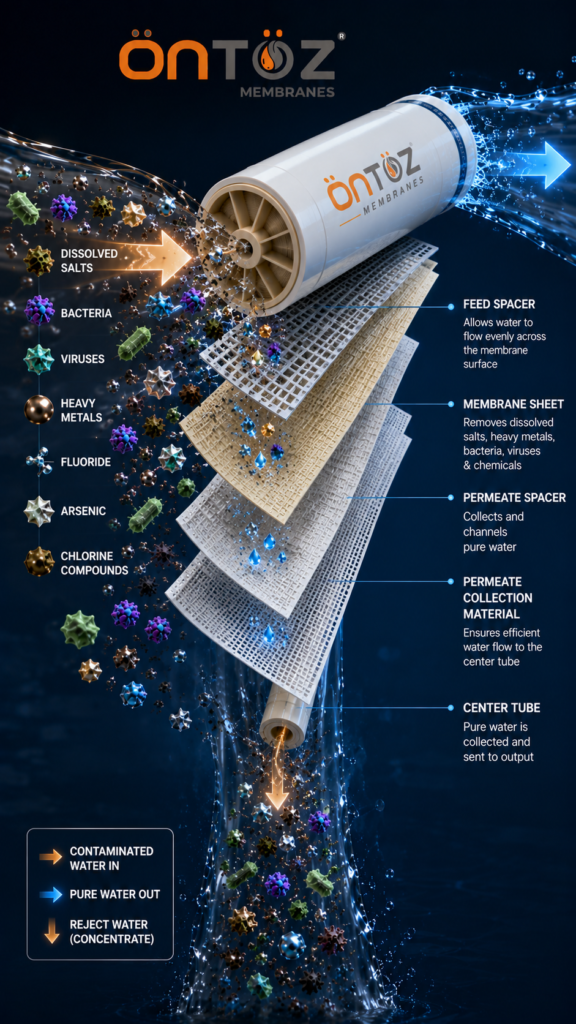
Although it appears to be a simple white cylinder, an RO membrane contains advanced engineering.
Main components include:
Creates channels for incoming water.
Ultra-thin semi-permeable layers where filtration occurs.
Collects purified water.
Carries purified water to the outlet.
Protects the membrane from pressure.
Different applications require different membrane technologies.
Ideal for home water purifiers.
Designed for restaurants, hotels, hospitals and offices.
Used in manufacturing, pharmaceuticals and process industries.
Designed for desalination plants handling extremely high TDS.
A high-quality membrane offers more than clean water.
Benefits include:
Watch for these common symptoms:
The lifespan depends on several factors.
Typically:
Proper maintenance can significantly extend membrane life.
Follow these best practices:
At ONTOZ Membranes, we manufacture high-performance RO membranes designed for consistent purification, durability, and efficiency. Our membrane solutions are engineered for domestic, commercial, and industrial applications with a focus on high salt rejection, excellent flow rates, and long service life. Whether you need reliable drinking water purification or large-scale industrial treatment, ONTOZ membranes are built to deliver dependable performance.